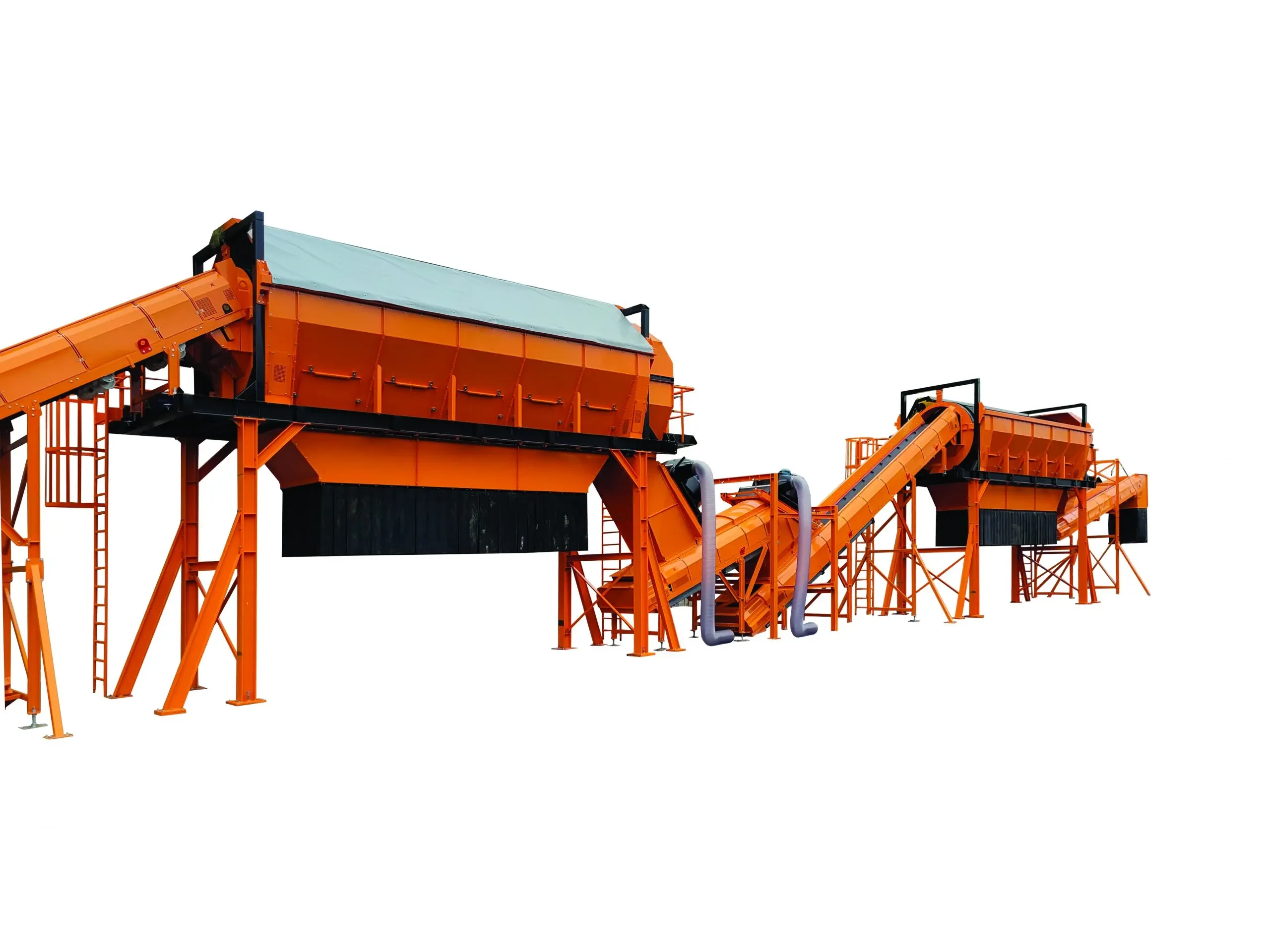
Waste sorting lines

Calculate the construction cost with us!
Fast and accurate construction cost calculation with our online calculator. Save effort β get precise figures for your project easily and quickly.
Order a consultation
Do you want the best concrete plant tailored to your needs? Fill out the form, and we will contact you.
KARMEL Waste Sorting Line — Ecological Solutions for Modern Business
Each year, waste recycling and disposal become increasingly important for preserving the environment and efficiently using resources. KARMEL offers modern automated waste sorting lines that allow maximally effective separation of useful fractions, minimizing waste, and reducing disposal costs.
Purpose of Waste Sorting Lines
β
Automation of the waste sorting process to increase efficiency.
β
Separation of waste into fractions: plastic, glass, metal, paper, organic materials.
β
Reduction of landfill disposal costs.
β
Optimization of recycling and secondary resource usage.
β
Minimization of environmental impact through separate collection and recycling of waste.
Composition of KARMEL Sorting Line
1. Loading Conveyor
πΉ Automated conveyor for feeding waste onto the sorting line.
πΉ Adjustable feed speed.
πΉ Equipped with magnetic sensors for initial metal removal.
2. Drum (Rotary) Screen
πΉ Preliminary sorting of waste by size.
πΉ Separation of fine fraction (sand, soil, organic residues).
πΉ Made from wear-resistant steel for long-term operation.
3. Magnetic Separators
πΉ Removal of ferrous metals from the general waste mass.
πΉ Use of powerful electromagnets for highly efficient sorting.
πΉ Optimized for handling large volumes of mixed waste.
4. Electromagnetic Induction Separator (for Non-Ferrous Metals)
πΉ Extraction of aluminum, copper, brass, and other non-ferrous metals.
πΉ High separation accuracy thanks to electromagnetic control system.
5. Optical Separators
πΉ Recognition and automatic sorting of various types of plastics (PET, LDPE, HDPE, PVC).
πΉ Built-in cameras and sensors determine material by reflection spectrum.
6. Manual Sorting System
πΉ Separation of residual waste that cannot be automatically sorted.
πΉ Ergonomic workstations with safety guards and lighting.
7. Press for Compressing Sorted Materials
πΉ Compact hydraulic press for packaging secondary raw materials.
πΉ Reduces volume for transportation and storage of waste.
8. Automatic Control System
πΉ Programmable PLC controller to manage all processes.
πΉ Real-time operation parameter monitoring.
πΉ Capability for remote monitoring via PC or smartphone.
Fractions That Can Be Sorted
β» Plastic (PET, polyethylene, polyvinyl chloride, polypropylene).
β» Glass (colored, clear, broken).
β» Metals (iron, aluminum, copper).
β» Paper and cardboard (office paper, newspapers, corrugated cardboard).
β» Organic waste (for composting or biofuel).
β» Residual MSW (non-recyclable waste for incineration or landfill).
Advantages of KARMEL Sorting Lines
1. High Productivity
β From 5 to 50 tons of waste per hour (depending on configuration).
β Automated processes allow reducing labor costs.
2. Reduced Disposal Costs
β Minimization of waste volumes requiring landfill.
β Selection of secondary raw materials for resale or recycling.
3. Flexibility in Configuration
β The line adapts to any type of waste (household, industrial, construction waste).
β Ability for modernization and production expansion.
4. Automation and Quality Control
β Built-in sensors and detectors monitor the sorting process.
β Remote control and monitoring reduce staff intervention.
5. Environmental Safety
β Closed dust removal system reduces air pollution.
β Compliance with international environmental standards ISO 14001.
Where are KARMEL sorting lines used?
π Solid municipal waste landfills (MSW).
π Municipal and private waste recycling plants.
π’ Enterprises for secondary raw material processing.
πΏ Ecological startups and environmental disposal enterprises.
How to order a KARMEL waste sorting line?
π 1. Consultation: contact our engineers to analyze your needs.
π 2. Design: development of a customized solution taking into account volumes and types of waste.
π 3. Manufacturing and delivery: equipment production and transportation.
π§ 4. Installation and commissioning: setup and launch of the line.
π 5. Staff training: equipment operation instructions.
β» 6. Warranty and service: long-term maintenance and technical support.
Why choose KARMEL?
β
25+ years of experience in industrial equipment development.
β
Certification according to international quality standards ISO 9001 and CE.
β
High-tech automated solutions.
β
Flexible models with scalability options.
β
Warranty and after-sales support.
Your partner in ecological solutions
The KARMEL waste sorting line is high productivity, automation, and environmental safety. We will help you create a profitable and environmentally friendly business in the waste recycling sector.
π² Contact us to get a personalized offer!
KARMEL β ecological solutions for the future! πβ»