en

Automatic control system

background

Calculate the construction cost with us!

Fast and accurate construction cost calculation with our online calculator. Save effort – get precise figures for your project easily and quickly.

Order a consultation

Do you want the best concrete plant tailored to your needs? Fill out the form, and we will contact you.

KARMEL Automatic Control System — Intelligent Concrete Production Management

Modern concrete mixing complexes, production lines, and transport systems require precise and stable control to increase productivity, minimize costs, and ensure continuous quality control. KARMEL Automatic Control Systems (ACS) are designed for automation of all processes in concrete production, enabling maximum efficiency and cost-effectiveness.


Purpose of Automatic Control Systems

βœ… Automation of concrete mixing plants, production lines, and conveyors.
βœ… Accurate dosing of components (cement, water, sand, gravel, additives).
βœ… Monitoring and regulation of all technological parameters (productivity, temperature, humidity).
βœ… Data storage and analysis to improve production efficiency.
βœ… Remote control and diagnostics of equipment via PC, tablet, or smartphone.


Capabilities of the KARMEL Automatic Control System

1. Automated Dosing and Mixing

πŸ”Ή Precise dosing of components thanks to high-precision weighing sensors.
πŸ”Ή Real-time control of concrete consistency and moisture.
πŸ”Ή Flexible recipe adjustment (up to 1000 different formulas).

2. Intelligent Production Process Management

πŸ”Ή Monitoring all operational stages of the concrete mixing complex.
πŸ”Ή Automatic start and stop of units according to preset parameters.
πŸ”Ή Temperature and fill level control of silos and hoppers.
πŸ”Ή Performance optimization through adaptive control algorithms.

3. Safety and Emergency Notification Systems

πŸ”Ή Automatic equipment shutdown in case of overload or malfunction.
πŸ”Ή Operator alerts about emergency situations via mobile app, SMS, or e-mail.
πŸ”Ή Monitoring sensor status and service intervals to reduce downtime risks.

4. Integration with Remote Control and Analytics

πŸ”Ή Remote control via the internet (connection to PC, smartphone, tablet).
πŸ”Ή Real-time data collection and analysis (material consumption, productivity, error statistics).
πŸ”Ή Synchronization with ERP and accounting software (1C, SAP, BAS).


Main Components of the KARMEL Automatic Control System

1. Central Controller (PLC – Programmable Logic Controller)

βœ… Executes all control and monitoring commands.
βœ… Integrates with all production components.
βœ… Supports remote updates and configuration.

2. Touch Operator Panel

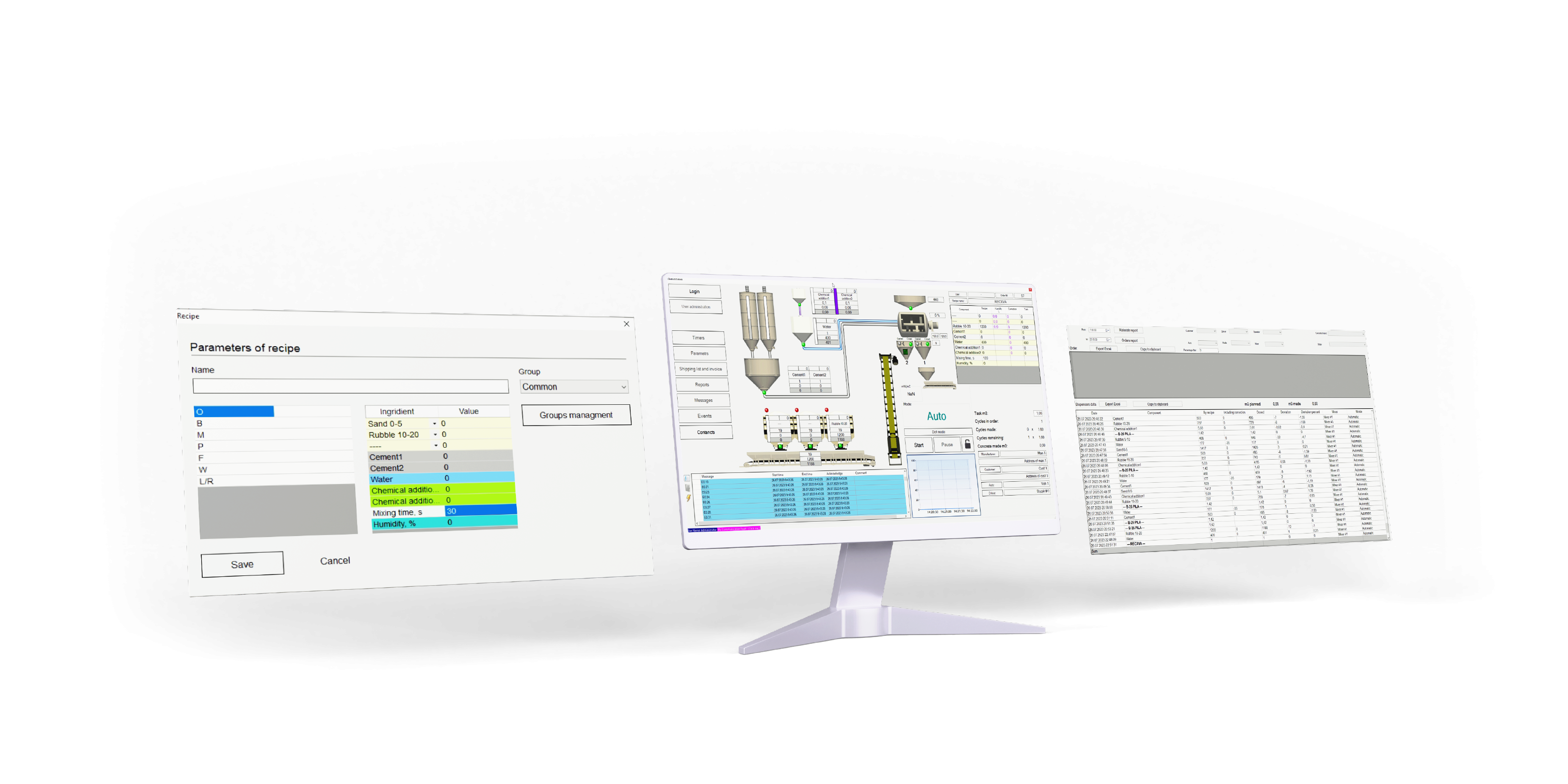
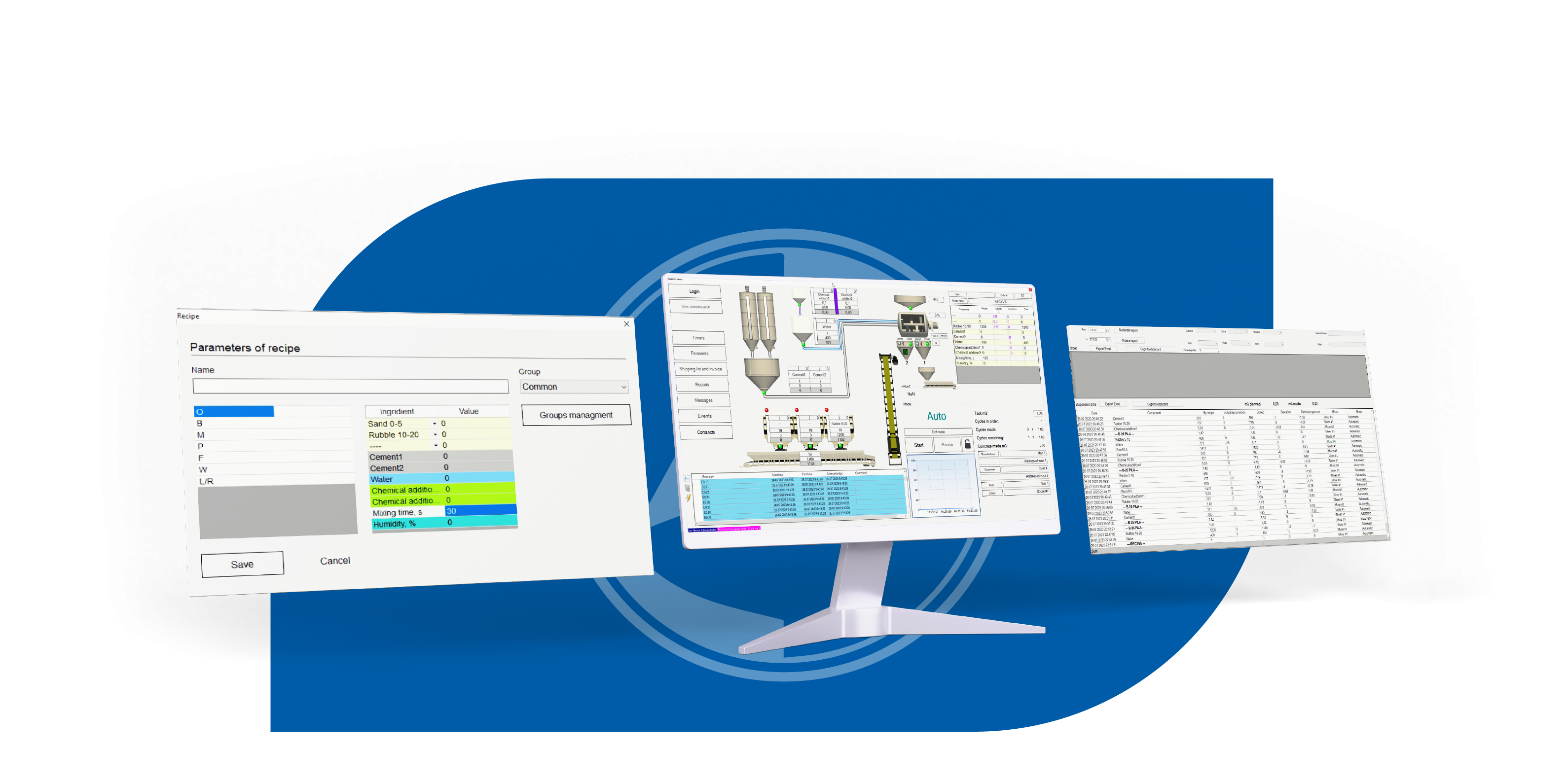
βœ… Intuitive interface for managing all processes.
βœ… Displays key operational parameters (temperature, material levels, productivity).
βœ… Allows manual or automatic operation modes.

3. Weighing Sensors and Dosers

βœ… High-precision dosing of cement, water, sand, gravel, additives.
βœ… Automatic error compensation during dosing.

4. Control Software

βœ… Flexible settings for adaptation to different technological processes.
βœ… Visualization of all production stages in the form of diagrams, charts, and tables.
βœ… Archiving all data and analysis for performance improvement.


Advantages of the KARMEL Automatic Control System

1. High Accuracy and Production Stability

βœ” Automatic regulation of all parameters minimizes errors and human factors.
βœ” High-precision sensors ensure accurate dosing of all components.

2. Increased Productivity and Resource Savings

βœ” Optimization of technological processes allows increasing output by 15-30%.
βœ” Reduction of material costs and defect rates through automatic quality control.

3. Flexibility and Ease of Use

βœ” Software adapts to the specific needs of the client.
βœ” The operator can change the concrete recipe with a single touch via the touch display.

4. Uninterrupted Operation and Reduced Downtime

βœ” Continuous equipment status monitoring helps prevent emergency shutdowns.
βœ” Integration with service departments for quick fault resolution.

5. Remote Access and Analytics

βœ” Operators and management can monitor production from anywhere in the world.
βœ” Analytical reports enable efficiency evaluation and forecasting of future expenses.


Where Are KARMEL Automatic Control Systems Used?

πŸ— Stationary concrete mixing plants.
πŸ— Mobile concrete units.
πŸ— Production lines for reinforced concrete structures.
πŸ— Automated elevators and grain processing complexes.
πŸ— Construction enterprises for managing dosing and transportation of bulk materials.


How to Order a KARMEL Automatic Control System?

πŸ“ž 1. Consultation: our experts will help determine the optimal solution for your production.
πŸ“ƒ 2. Design: we will develop a custom automation system considering the specifics of your enterprise.
πŸ— 3. Manufacturing and Setup: installation and integration of ACS into existing equipment.
πŸ”§ 4. Staff Training: we conduct operator instruction for effective use.
πŸ›  5. Warranty and Service: we provide warranty service and remote technical support.


Why Choose KARMEL?

βœ… 25 years of experience in concrete production automation.
βœ… Compliance with international standards ISO 9001 and CE.
βœ… Warranty and after-sales service.
βœ… Individual approach and flexibility in settings.
βœ… Capability to integrate with any production lines.


Your Reliable Partner in Automation

The KARMEL Automatic Control System — reliability, efficiency, and ease of use. We will help you reduce costs, increase productivity, and achieve stable product quality.

πŸ“² Contact us and order a modern automation system for your enterprise!

KARMEL — Innovations Working for You!